Where curiosity gets messy.
Daring tests, happy accidents, messy failures, and those unique, sublime seconds when every element unites perfectly.
Welcome to the Studio Lab.
Most Artistic Obsessions pieces don't begin with a finished plan. They begin with a question:
What happens if I try this?
The Studio Lab is where those questions get tested—with casting materials, pigments, mica, texture, bubbles, metallics, unexpected tools, and occasionally things that probably weren't intended for art in the first place.
Some experiments become finished pieces. Some lead to entirely new techniques. Some fail spectacularly.
All of them teach me something.
This is a look behind the finished work: the experiments, discoveries, mistakes, and happy accidents that happen along the way.
FEATURED EXPERIMENT
The Bubble Texture Rabbit Hole
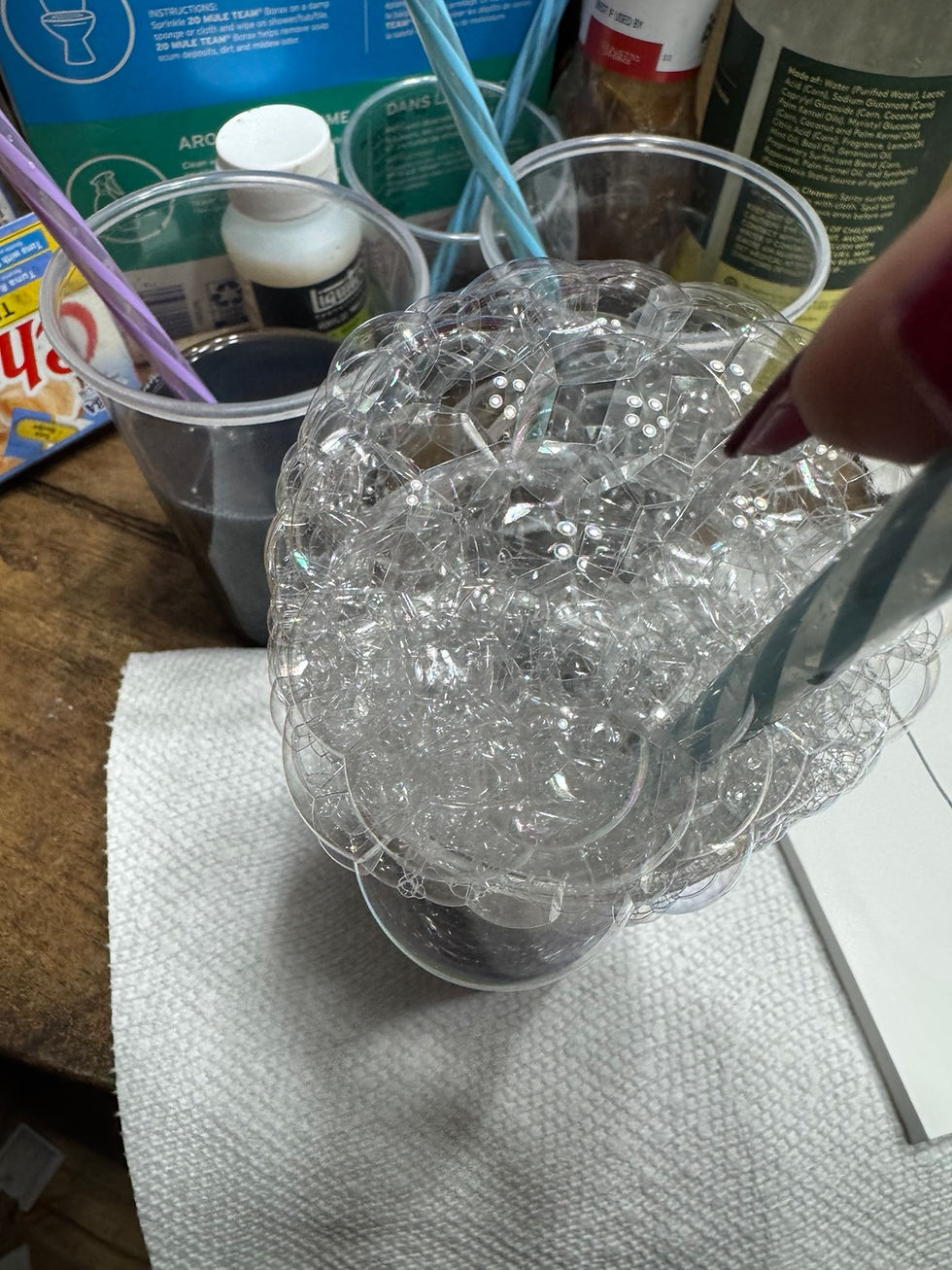

I was experimenting with ways to create organic cell patterns and discovered that a simple bubble mixture could produce something far more interesting than I expected. What began as a surface experiment quickly turned into a rabbit hole of bubble size, color, metallics, layering—and eventually, actual physical texture.
Not metaphorical ones. Actual bubbles.
It started with bubbles.
WHEN PATTERN BECAME TEXTURE
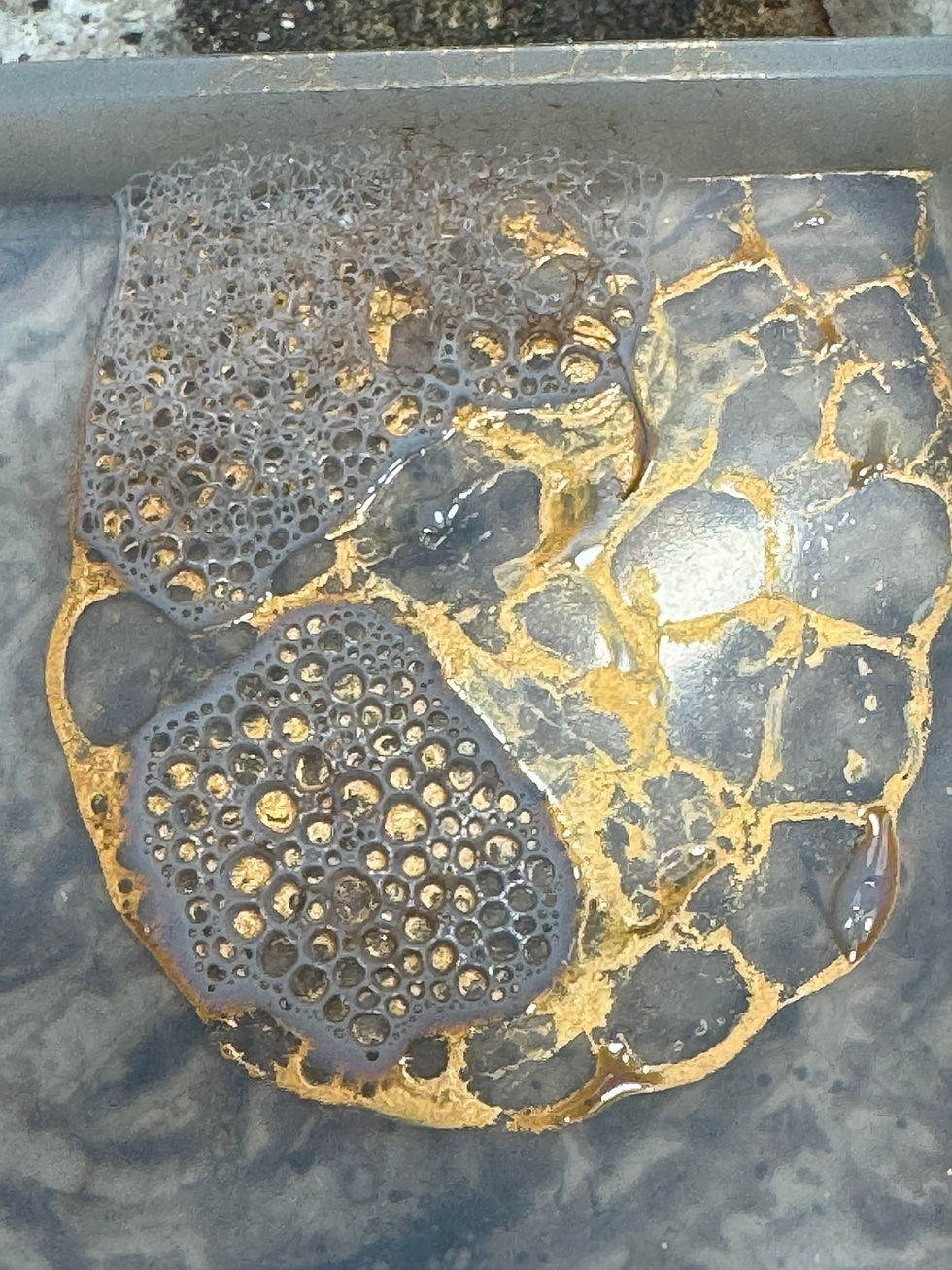

The bubbles weren't just leaving a visual cell pattern anymore. They were creating actual surface texture—tiny ridges, craters, and irregular edges that changed how the piece caught light.
That was the turning point.
Once I realized that, the experiment changed from “Can bubbles make an interesting pattern?” to “How much control can I get over them?”

FROM CHAOS TO CONTROL
FROM CHAOS TO CONTROL
What started as an unpredictable surface experiment became something I could begin to direct.
By controlling where the bubbles were placed—and eventually using masking to define their boundaries—I could choose where the texture appeared and where the surface remained untouched.
The chaos was becoming a tool.

THE MASKING BREAKTHROUGH
By protecting selected areas before applying the bubble mixture, I could create a deliberate boundary between textured and untouched surfaces.
Masking changed everything.
What had started as an unpredictable effect was becoming repeatable—and usable.

WHEN AN EXPERIMENT BECOMES A TOOL

What began as an experiment in surface texture had become something more useful: a technique I could intentionally bring into a piece.
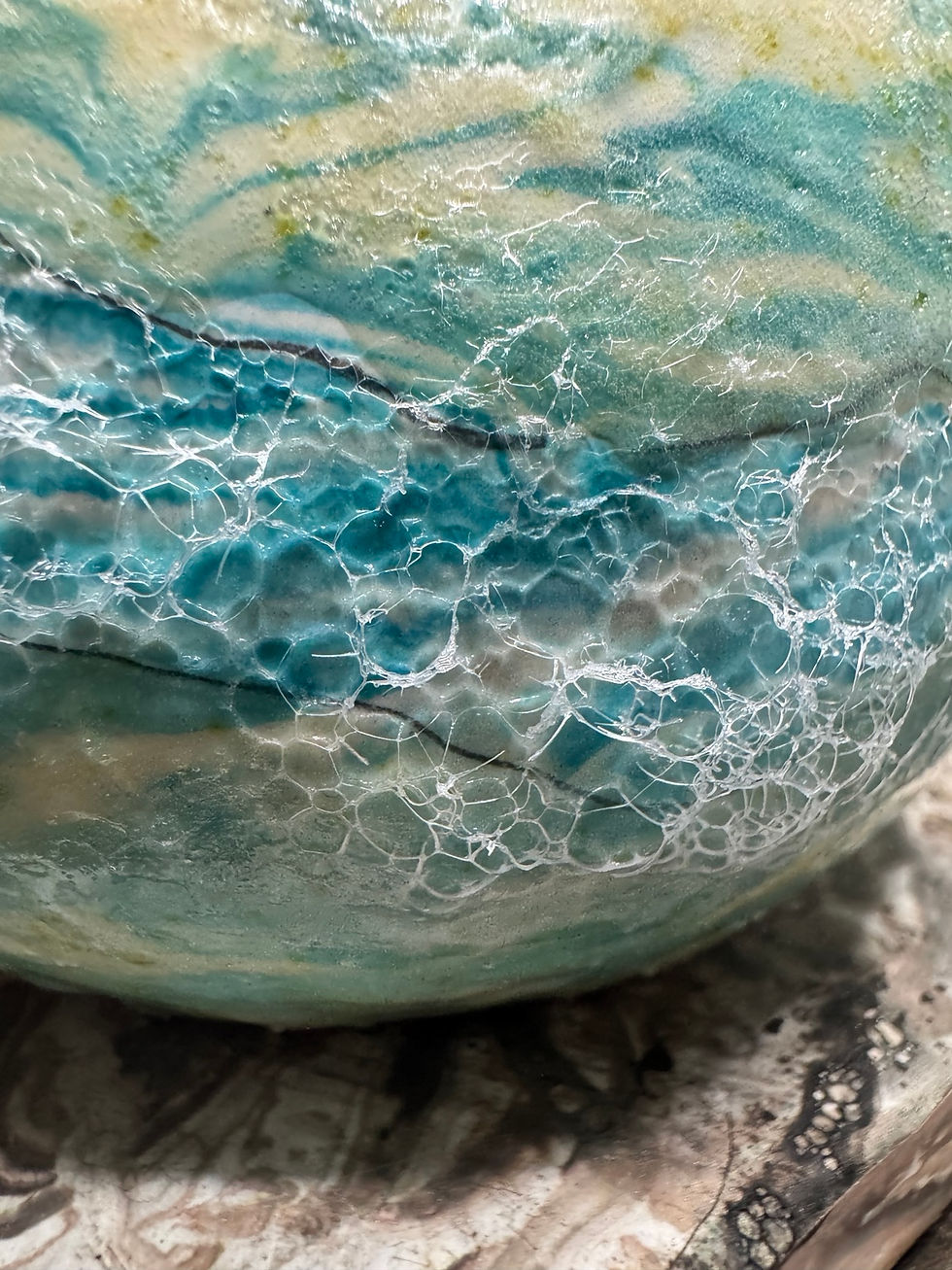
Here, the bubbles weren't simply an effect. They became part of the composition—following the form, revealing layers beneath, and creating a surface that feels almost geological.
The experiment had become part of the toolbox.

MORE FROM THE LAB
It started with crumpled aluminum foil and a question: what kind of surface would this leave behind?
The first cast answered that—and created several more questions.

FOIL → STONE
The foil disappeared. The texture stayed.

ACCIDENT → TEXTURE

An experiment with acrylic color interfered with the surface of the cast, leaving areas that hadn't hardened normally.

This one wasn't planned.
After demolding, I started scrubbing away at the compromised material.
And underneath it was this. Deep ridges, fractured edges, and exposed layers that looked more like naturally weathered stone than anything I could have deliberately sculpted.
I still don't know exactly which part of the experiment caused it.
Which, of course, means I have to try again.

What if the color didn't come from color at all—but from the way the surface caught the light?
CHASING THE SHIFT
Some color only exists when the light agrees.
Interference mica doesn't behave like ordinary pigment. Depending on the angle and the light, it can seem almost invisible—then suddenly flash across the surface.
Which makes experimenting with it fascinating.
And photographing it infuriating.
These two images were taken from slightly different angles. The blue shimmer moves with the light, appearing in one place and disappearing in another.
Sometimes the camera catches it.
Sometimes only your eye does.

TEXTURE ON TEXTURE

What happens when one raised surface isn't enough?
This piece started with joint compound pushed through a stencil to create relief.
Then I covered that texture with embossing powder.
The result was part sculpted surface, part metallic/mineral finish—and one of those experiments I had nearly forgotten the details of until I looked back at it again.
Sometimes the experiment teaches you something immediately. Sometimes it waits two years.
HOT GLUE, BUT MAKE IT TEXTURE
What happens when a craft adhesive becomes a mold making tool?


I started experimenting with hot glue as a way to create physical topography inside a cast.
Instead of simply adding texture to the surface, the glue created ridges, depressions, pockets, and irregular edges that the casting material had to flow around.
Then came the next question:
What could I use to texture the hot glue itself?
Foil worked. Textured objects worked. Even a rock became a texture stamp.
What started as an experiment with a glue gun became another way to build a surface—one that was unpredictable, imperfect, and much more organic than anything I could have carefully sculpted.
Sometimes the wrong tool turns out to be exactly the right one.

This one started with a simple goal: add glow.
Instead, the materials reacted in a way I didn't expect. Parts of the surface didn't cure normally, and after demolding I had to scrub and peel away the compromised material.
What was left was rough, fractured, uneven—and completely different from what I had intended.
It was not pretty.
It was not subtle.
And it definitely was not the glow effect I was trying to create.
But the damaged areas revealed layers, ridges, and mineral-like textures I never would have designed on purpose.
Sometimes a failed experiment still leaves behind something worth noticing.
WHEN IT ALL GOES WRONG
What happens when an experiment refuses to do what it was designed to do?

LAB VERDICT
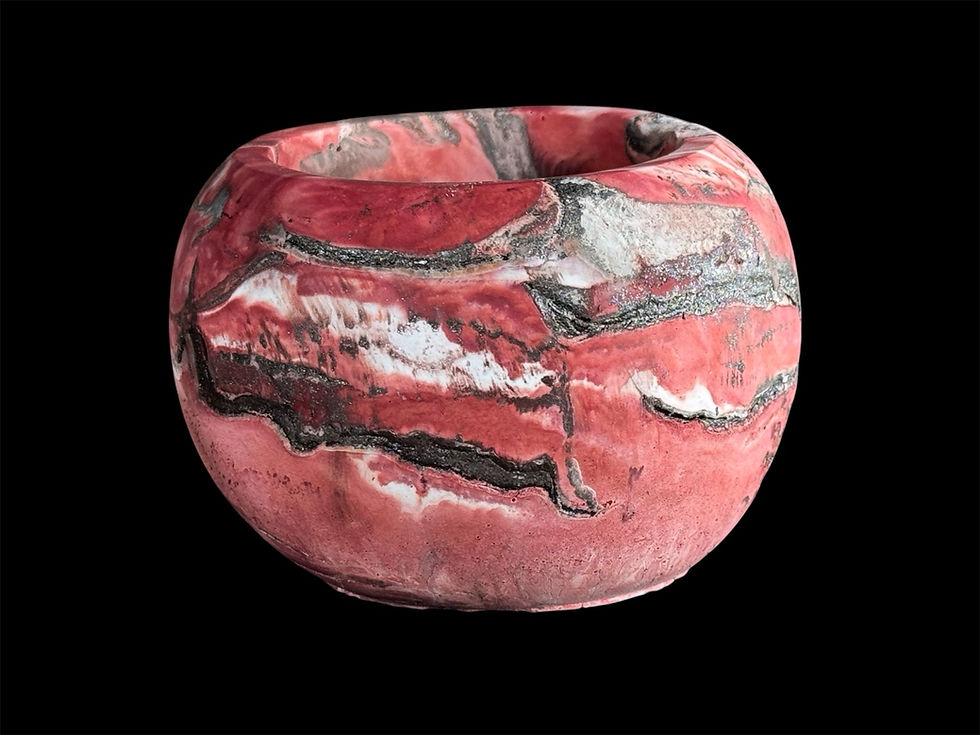
There are no failed experiments. Just results I wasn't expecting.
Curiosity is at the heart of everything I make.
Sometimes an experiment becomes a finished piece. Sometimes it becomes a new technique. Sometimes it becomes a spectacular mess.
But every pour, texture, pigment, strange tool, and unexpected reaction adds something to the next experiment.
The question is always the same:
What happens if I try this?